Steadily moving towards net zero: UNIQA remains on course
Sustainability is not a short-term trend for UNIQA, but an integral part of our corporate strategy. Despite some noticeable volatility in the regulatory framework and public interest in the topic, we remain committed to our climate targets and are clearly aligning our business model with net zero emissions and the goals of the Paris Climate Agreement:
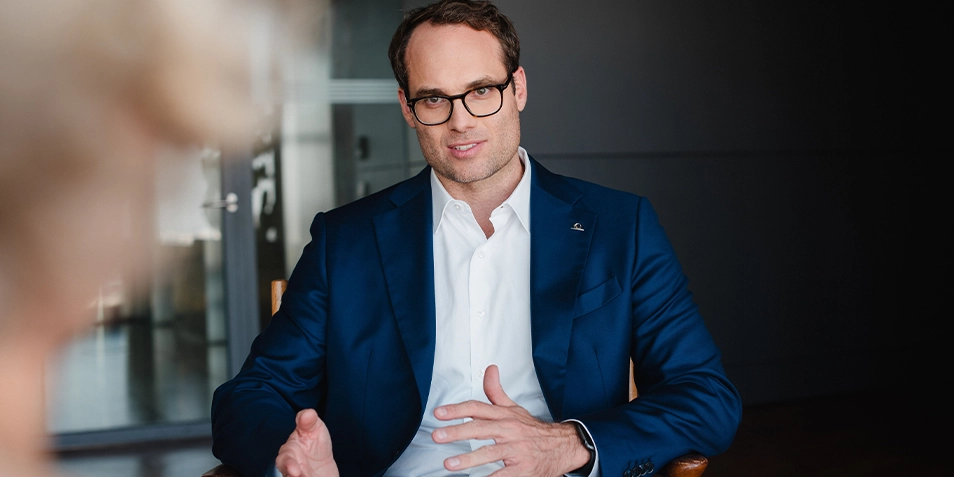
“For UNIQA, sustainability is the central framework for long-term value creation and responsible business practices. We are pursuing the transformation consistently – with clear goals, verifiable measures and a long-term perspective focused on future generations.”
Climate risks exist irrespective of political framework conditions and are increasing to a measurable extent. Looking at the past five years, there is a clear upward trend in weather-related claims, both in Austria and in other UNIQA countries, even if there are strong fluctuations from year to year. In 2025, for example, UNIQA’s weather-related losses were significantly lower than in the previous year at €102.6 million. These long-term developments confirm the relevance of our business and our responsibility towards customers, investors, suppliers and society.
UNIQA has been pursuing a strategic, fact-based and long-term sustainability approach for many years. Our transition plan provides us with a clearly defined roadmap for decarbonisation: net zero emissions in Austria by 2040 in the insurance business and in operational ecology, and across the Group by 2050 in all core business lines. The gradual phase-out of coal, oil and natural gas gives us important leverage here. Alongside this, we are continuously expanding our portfolio of sustainable investments, which already reached the €2.5 billion mark in 2025.
This consistent focus on sustainability is also reflected in international ratings. UNIQA was able to improve its important external sustainability ratings once again in 2025. The continuous progress ensures that our sustainability performance is among the best in the industry, in terms of both transparency and the effectiveness of the actions taken.
UNIQA remains committed to some well-known initiatives such as the Green Finance Alliance (GFA), the Net Zero Asset Owner Alliance (NZAOA), the Principles for Responsible Investment (PRI) and the Principles for Sustainable Insurance (PSI). These alliances regularly review actions and interim targets and ensure that the path toward transformation remains robust and transparent.
We are also currently sharpening our focus on the development of sustainable insurance products. Our newly developed ESG Customer Strategy has enabled us to systematically incorporate processes and solutions with which we actively and effectively support customers in their transformation.
Our focus for 2026 involves continuing to put our transition plan into operation. This includes Group-wide implementation of green electricity solutions, ongoing electrification of our vehicle fleet and further measures to decarbonise our own operations. At the same time, diversity and inclusion remains an indispensable part of the company’s development and of our cultural focus.
|
2024 |
2025 |
Target |
|||||||||
|---|---|---|---|---|---|---|---|---|---|---|---|---|
Company management |
Greenhouse gas emissions from owner-occupied buildings and vehicle fleet |
9,9651) t CO2e |
10,010 t CO2e |
–42% |
||||||||
Electrification of the UNIQA vehicle fleet |
AT: 74.0% |
AT: 100% (by 2030) |
||||||||||
Investments |
Emissions intensity of the investment portfolio (WACI) |
44 t CO2e/€ million revenue |
42 t CO2e/€ million revenue |
40 t CO2e/€ million revenue |
||||||||
Sustainable investments |
€2.4 billion |
€2.5 billion |
€2 billion (by 2025) |
|||||||||
Insurance business |
Greenhouse gas emissions from the corporate customer business (Scope 1 & 2) |
AT: 35,314 t CO2e |
AT: –20% |
|||||||||
Corporate customers with net zero targets (AT) |
55.3% |
68.6% |
100% (by 2040) |
|||||||||
Greenhouse gas emissions from the retail motor vehicle portfolio |
393,405 t CO2e |
389,531 t CO2e |
– |
|||||||||
People |
Employees |
16,394 (HC4)) |
15,866 (HC) |
– |
||||||||
Gender pay gap (adjusted) |
3.4% |
2.4% |
2.8% (by 2025) |
|||||||||
Women in top management positions |
39.4% |
42.5% |
– |
|||||||||
Best employer, measured by the EX Index (Employee Experience Index) |
4.0 stars |
4.1 stars |
4.5 stars |
|||||||||
|
||||||||||||
|
Rating agency |
2024 |
2025 |
|---|---|---|---|
CDP |
|
C |
↗ A- |
Morningstar Sustainalytics |
|
18.9 |
↗ 17.1 |
S&P Global |
|
43 |
↗ 49 |



Building up expertise for the future
To effectively communicate the Group’s sustainability ambitions to the outside world, UNIQA consistently focuses on its own employees; they form the foundation of the Group-wide sustainability strategy and are key to successful implementation of our sustainability targets.
We further strengthened this focus in 2025 with the UNIQA University internal training platform. The newly created “Sustainability & Business Resilience” faculty offers numerous courses on general and UNIQA-specific sustainability-related topics. The programme is constantly being expanded and will remain a focal area in 2026 in order to build up the relevant expertise.
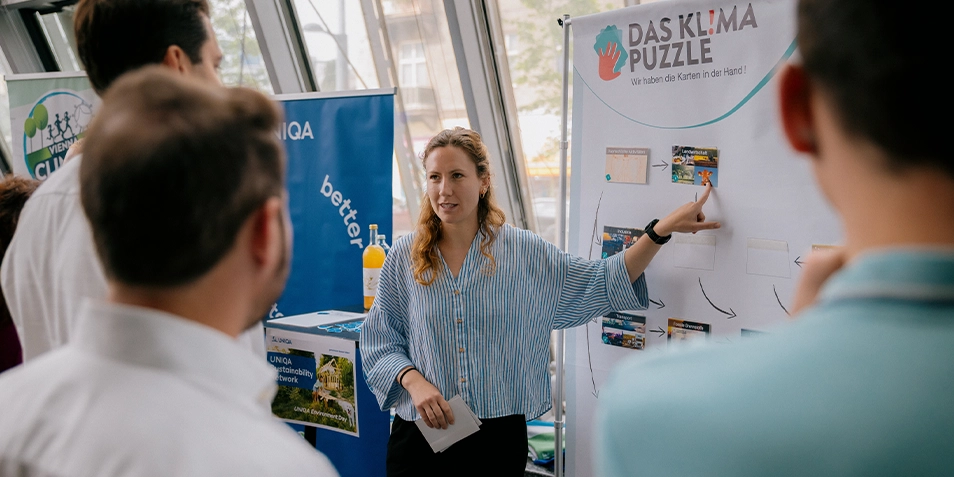
We introduced the Climate Puzzle as an interactive learning format in Austria in 2025 to improve systemic understanding of climate change. A roll-out to other UNIQA countries is planned for 2026. In addition, regular workshops, action days and presentation formats with internal and external experts were held during the financial year. Action weeks and specific learning programmes on the topic of sustainability were also offered in Czechia, Slovakia and Poland during the financial year. We are currently working on expanding this offering for employees in our other markets and will implement this progressively over the next few years.
These initiatives not only strengthen the base of knowledge and skills across the entire company, but also foster sustainable development of products, processes and customer solutions.
Developing resilience together
Founded in 2024, our subsidiary UNIQA Sustainable develops and operates professional services relating to sustainability, climate risks, risk management and training and supports companies in developing their sustainability performance strategically, transparently and effectively. We made considerable progress in this area last year – particularly with the development of new services and the expansion of the UNIQA Sustainable Academy, which provides companies with practical training and tools for their journey towards sustainable corporate governance.
The successful implementation of our first project as part of our new Voluntary Standard for Small and Medium-sized Enterprises (VSME) service represented another important milestone in 2025. New Originals, a company that produces high-quality tofu products and places particular emphasis on quality, regional ingredients and a sustainable plant-based diet, was the first customer acquired here. The VSME report that we compiled provides a clearly structured and credible description of New Originals’ sustainability performance, provides orientation and increases transparency for stakeholders. It thus supports targeted further development of the sustainability strategy both for the customer and for the UNIQA Group.
UNIQA Sustainable – Services at a glance
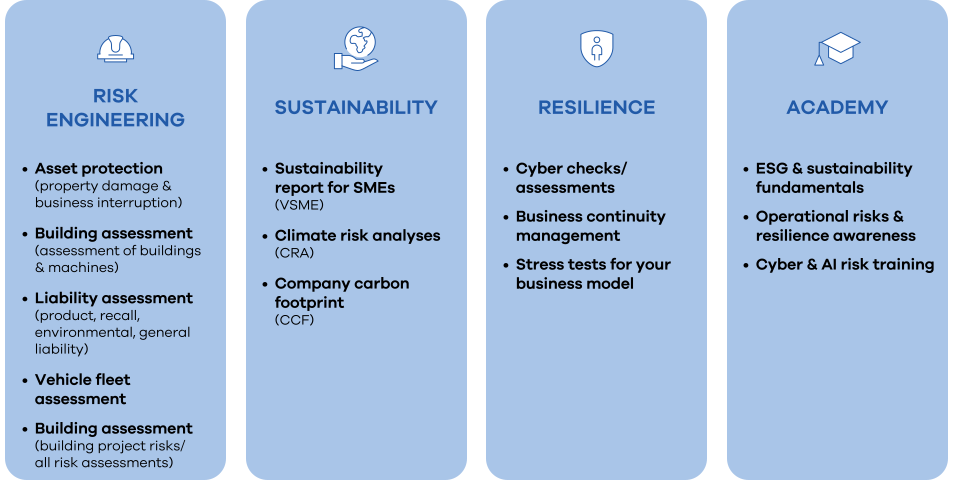
We have also already successfully implemented our first customer projects in the area of climate risk analysis – one of them together with the company brotsüchtig, an artisan bakery that stands for high-quality regional and sustainably produced baked goods. Our climate risk analysis provides brotsüchtig with valuable insights into possible physical risks that could arise as a result of climate change and identifies specific options for action. This gives the company planning security, strengthens the resilience of its supply chains and helps safeguard its sustainable direction in the long term.
We further expanded the UNIQA Sustainable Academy in 2025 following its successful launch last year: The new learning platform for external business customers provides multilingual online courses on ESG risks, sustainability and climate change that can be booked directly and used in our target countries.
A training programme for UNIQA risk engineers and commercial customer managers on the topics of climate change, sustainability and cyber risks has also been developed in close cooperation with UNIQA University.