
1. General information
1.1 General basis for preparation of sustainability statements (BP-1)
The sustainability statement for 2025 was prepared on a consolidated basis and comprises all fully consolidated Group companies of UNIQA Insurance Group AG. The scope of consolidation is therefore the same as for the consolidated financial statements.
When assessing the materiality of and management of impacts, risks and opportunities, UNIQA examines its own business operations as well as the entire upstream and downstream value chain. Issues identified in the upstream value chain primarily pertain to suppliers for UNIQA’s operations. The most important aspects related to sustainability topics in the downstream value chain concern UNIQA’s investment portfolio (own investments and investments of third-party funds) and those of its insurance customers.
UNIQA has not made use of the option granted in ESRS 1 paragraph 7.7 to omit certain information on intellectual property, know-how or results of innovation.
1.2 Disclosures in relation to specific circumstances (BP-2)
1.2.1 Time horizons
The time horizons used in UNIQA’s sustainability reporting are equal to the ones set forth in ESRS 1 paragraph 6.4:
Short-term time horizon: up to one year
Medium-term time horizon: from the end of the short-term reporting period up to five years
Long-term time horizon: more than five years
1.2.2 Value chain estimates, sources of estimation and outcome uncertainty
The sustainability impacts, risks and opportunities of UNIQA are largely linked to activities along the value chain rather than direct business activities. This reflects the special characteristics of the business model.
As a result, the ability to drive positive change, reduce risk and seize opportunities essentially hinges on how effectively UNIQA is able to advocate for and influence sustainable practices beyond its own processes.
Value chain estimates are often used to measure sustainability performance because the availability of accurate information may vary depending on the contractual conditions and degree of influence. Where there is a lack of direct data, available data are supplemented by indirect sources such as industry benchmarks or other approximations. This approach ensures that UNIQA bases the corresponding estimates on sound and contextualised methodologies.
All estimates are subject to strict criteria regarding accuracy, relevance and consistency to ensure conclusive and reliable results. For the sake of transparency, details on the metrics for which estimates are used, including their scope, underlying assumptions and potential uncertainties, are disclosed in the respective topical standards:
Climate change (E1):
Science Based Targets initiative (SBTi) targets & target progress
Climate change in investment:
Science Based Targets initiative (SBTi) targets & target progress
Weighted average carbon intensity (WACI)
Financed emissions from investments in companies
Financed emissions from investments in government bonds
Climate change in the corporate business:
Insurance-associated GHG emissions (corporate customers)
Climate change in the retail business:
Insurance-associated GHG emissions (retail customer motor vehicle business)
Climate change in real estate and operational ecology:
Science Based Targets initiative (SBTi) targets & target progress
GHG emissions from leased assets
Energy consumption and GHG emissions from owner-occupied properties
GHG emissions from vehicles used for company purposes
1.2.3 Changes in the preparation or presentation of sustainability information
In the financial year, there were changes in the preparation or presentation of certain sustainability information compared with the previous year. Details on the metrics changed, including the reasons for the changes, are disclosed in the corresponding topical standards:
Climate change (E1):
Share of Scope 3 GHG emissions calculated on the basis of primary data
Biogenic GHG emissions
GHG emissions according to E1-6
GHG intensity per net revenue
Climate change in investment:
Financed emissions from investments in companies
Financed emissions from investments in government bonds
Climate change in the corporate business:
Metrics for business with customers that are active in the fossil fuel or renewable energy sectors
Insurance-associated GHG emissions (corporate customers)
Climate change in real estate and operational ecology:
Energy consumption and GHG emissions from real estate
The UNIQA workforce (S1):
Adjusted gender pay gap
1.2.4 Reporting errors in previous reporting periods
During the preparation of the reporting, errors were identified in certain figures from the previous year. These have since been corrected. Details are disclosed in the respective topical standards:
Climate change (E1):
Biogenic GHG emissions
GHG emissions according to E1-6
GHG intensity per net revenue
Climate change in investment:
Direct investment volumes in companies that generate >30 per cent of their revenue from activities in the oil sector (production, processing, power and heat generation)
Climate change in real estate and operational ecology:
Science Based Targets initiative (SBTi) targets & target progress
Energy consumption and GHG emissions from real estate
1.3 The role of the administrative, management and supervisory bodies (GOV-1) and information provided to and sustainability matters addressed by the undertaking’s administrative, manage-ment and supervisory bodies (GOV-2)
UNIQA is governed by the Management Board; the Supervisory Board and its committees are responsible for overseeing the management of the company.
|
Executive members |
Non-executive members |
||
|---|---|---|---|---|
|
2025 |
2024 |
2025 |
2024 |
Number of members as of 31/12 |
7 |
7 |
15 |
15 |
of which male members (%) according to annual average |
85.7% |
87.5% |
60.0% |
62.8% |
of which female members (%) according to annual average |
14.3% |
12.5% |
40.0% |
37.2% |
Average female to male ratio |
0.17 |
0.14 |
0.67 |
0.59 |
The Supervisory Board is comprised of ten shareholder representatives and five employee representatives. All members of the Supervisory Board elected during the Annual General Meeting have declared their independence under Rule 53 of the Austrian Code of Corporate Governance (ÖCGK). Both Anna Maria D’Hulster and Jutta Kath additionally meet the criteria under Rule 54 of the Austrian Code of Corporate Governance, as they are neither shareholders with a stake of more than 10 per cent nor do they represent the interests of such shareholders.
In one of its guidelines, UNIQA has set the requirements for the professional qualification (“Fit”) and personal reliability (“Proper”) of the individuals in charge of managing the company or who hold other key functions. The aim of these requirements is to ensure that these individuals remain professionally qualified and personally reliable on the basis of a rules-based procedure. The principle of collective professional qualifications applies in this regard. Both the Management Board and the Supervisory Board have many years of experience in the international insurance business as well as in the banking and information technology sectors.
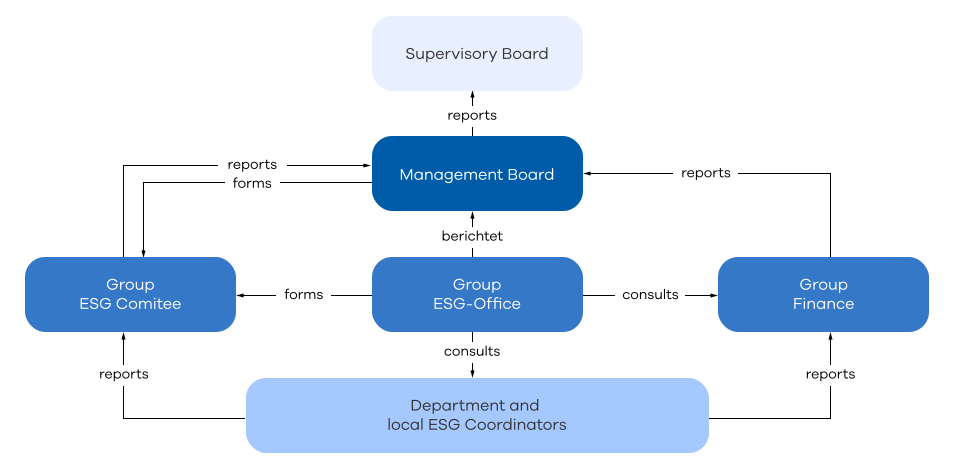
Group ESG Committee
Impacts, risks and opportunities are monitored on an ongoing basis by the Group ESG Committee, which is made up of two members of the Management Board and the heads of Asset Management, Corporate Business, Retail Business, Legal & Compliance and the Group ESG Office. The Group ESG Committee meets twice a year and is responsible for the integration of ESG matters into UNIQA’s core business. Its most important tasks include the following:
Strategic definition and continuous development of Group-wide ESG ambitions
Ongoing monitoring of stakeholders’ awareness of environmental and social impacts along with setting the topics to be addressed as focal points in communications with stakeholders
Adoption of the materiality assessment and discussion of material impacts, risks and opportunities
ESG target setting and KPI monitoring with regard to material impacts, risks and opportunities
Supervision of the Group-wide climate strategy and environmental management along with material impacts, risks and opportunities
The Group ESG Committee reported to the Management Board on impacts, risks and opportunities on a quarterly basis during the financial year. In the financial year, the Group ESG Committee focused on the impacts, risks and opportunities related to climate change mitigation and adaptation with regard to underwriting, investments and own operations, as well as on biodiversity. The materiality assessment was also discussed, and the resulting material impacts, risks and opportunities were presented and decided upon. Updates from all core areas of the sustainability strategy are also covered.
Group ESG Office
The Group ESG Office is responsible for coordinating sustainability agendas across the Group and reports to the member of the Management Board responsible for Sustainability, who also chairs the Group ESG Committee. The Management Board receives quarterly reports from the Group ESG Office with updates on impacts, risks and opportunities as well as the progress on the sustainability strategy.
Group Finance and local ESG coordinators
Group Finance prepares the notes to the consolidated financial statements along with the Group Management Report and ensures that non-financial disclosures are consistent with the financial disclosures. Group Finance reports to the member of the Management Board responsible for Finance and Risk Management.
ESG experts tasked with the operational and specialist development and implementation of content and measures have been appointed at the Group companies. In the international Group companies, strategic ESG coordinators have been integrated into the local organisational structure and governance in all countries and regions in which the UNIQA Group operates.
Management Board and Supervisory Board
The Management Board receives quarterly reports from the Group ESG Office with updates on the progress of the sustainability strategy, the status of ongoing projects and the climate strategy to ensure effective monitoring and oversight. The Management Board also reports to the Supervisory Board on a quarterly basis on progress with respect to material impacts, risks and opportunities and corresponding targets. The Management Board currently does not take any systematic analyses or assessments of impacts, risks and opportunities (IROs) into consideration when reviewing and making decisions on material transactions. The Supervisory Board defines the sustainability strategy to be pursued each year and reviews the sustainability reporting in the advisory body of the Audit Committee.
The Management Board has relevant expertise on the climate and sustainability. One member of the Management Board has completed post-graduate studies on the topic of environmental management. The Supervisory Board attends training sessions each year to adapt to the ongoing changes in relation to sustainability. The training sessions cover current topics related to risk management and the regulatory environment, with particular attention paid to impacts, risks and opportunities specific to UNIQA. In the financial year, the Supervisory Board also received training on specific sustainability topics. Training focused on the climate transition plan, the EU Taxonomy and biodiversity.
During the financial year, the Management Board and Supervisory Board focused on the following ESG topics: CSRD reporting and materiality assessment, regulatory requirements, ESG ratings, biodiversity, ESG customer strategy and employee engagement.
Target setting and monitoring
With the support of the Group ESG Office, the specialist departments set targets with respect to material impacts, risks and opportunities. The targets are subject to approval by the member of the Management Board responsible for the department in question, by the Group ESG Committee and, if necessary, by the Management Board. The Group ESG Office grants technical approval and ensures the targets are aligned with Group targets. Progress on target achievement is analysed and interpreted by the specialist departments with the supervision of the Group ESG Office and reported to the Group ESG Committee and the Management Board.
1.4 Integration of sustainability-related performance in incentive schemes (GOV-3)
The percentage of remuneration granted to members of the Management Board associated with climate-related considerations was 10.2 per cent in 2025 (2024: 18.1 per cent).
No performance-related remuneration components are included in the remuneration granted to members of the Supervisory Board.
The share of short-term variable remuneration in annual fixed income is 65 per cent (2024: 65 per cent). A certain percentage of the variable remuneration granted by UNIQA is linked to the achievement of sustainability-related targets. The goals and the targets set depend on the nature of the programme (short-term or long-term variable remuneration component) as well as on the target group and are outlined in the table below. The short-term targets (STI) always cover a one-year period, while the long-term targets (LTI) cover a four-year period:
|
Short-term variable remuneration (STI) – ESG-relevant functions |
Short-term variable remuneration (STI) |
Short-term variable remuneration (STI) |
Long-term variable remuneration (LTI) |
|---|---|---|---|---|
Target group |
CEO, CFRO, member of the Management Board responsible for ESG |
Members of the Management Board excl. CEO, CFRO and the member of the Management Board responsible for ESG |
Other executives |
All Management Board members |
Target |
Reducing the weighted average carbon intensity of the investment portfolio (WACI) |
Reducing the weighted average carbon intensity of the investment portfolio (WACI) |
Reducing the weighted average carbon intensity of the investment portfolio (WACI) |
Reducing the carbon footprint of the investment portfolio |
Share of annual target bonus |
5% |
5% |
5% |
10% |
Share of individual target bonus |
10% |
0% |
n/a |
n/a |
|
|
|
|
|
Target |
Narrowing the adjusted gender pay gap |
Narrowing the adjusted gender pay gap |
Narrowing the adjusted gender pay gap |
Increasing the proportion of women in top management positions |
Share of annual target bonus |
5% |
5% |
5% |
10% |
Share of individual target bonus |
0% |
0% |
n/a |
n/a |
|
|
|
|
|
Target |
Increasing customer satisfaction |
Increasing customer satisfaction |
Increasing customer satisfaction |
|
Share of annual target bonus |
10% |
10% |
10% |
|
Share of individual target bonus |
0% |
10% |
n/a |
|
Pursuant to Section 78b (1) of the Austrian Stock Corporation Act, the Remuneration Policy for the Management Board is drawn up by the Supervisory Board, reviewed on an annual basis and submitted to a vote at the Annual General Meeting every four years or in the event of a material change. The current remuneration policy was drawn up by the Supervisory Board on 10 April 2024 and approved at the Annual General Meeting held on 3 June 2024.
The remuneration of other managers is governed by the Remuneration Policy. The Remuneration Policy for UNIQA is subject to approval by the Group Remuneration Committee.
1.5 Statement on due diligence (GOV-4)
The core elements of due diligence are outlined in the following sections:
|
Section in the report |
|---|---|
a) embedding due diligence in governance, strategy and business model |
ESRS 2 GOV-2: Information provided to and sustainability matters addressed by the undertaking’s administrative, management and supervisory bodies |
b) engaging with affected stakeholders in all core elements of due diligence |
ESRS GOV-2 Information provided to, and sustainability matters addressed by the undertaking’s administrative, management and supervisory bodies |
c) identifying and assessing adverse impacts |
ESRS 2 SBM-3: Material impacts, risks and opportunities and their interaction with strategy and business model |
d) measures to address these adverse impacts |
The respective sections on “Impact, risk and opportunity management” |
e) tracking the effectiveness of these efforts and communicating |
The respective section on “Metrics & targets” |
1.6 Risk management and internal controls over sustainability reporting (GOV-5)
The completeness and correctness as well as the consistency of the data and disclosures included in the sustainability reporting were identified as key issues for internal control purposes. A CSRD Reporting Manual and standardised templates for the collection of quantitative data ensure that definitions and methods for sourcing reporting information are consistent across the Group. Plausibility and completeness checks have been established at the level of the Group companies as well as at the Group level to verify the quantitative disclosures. Standardised checklists are used to check that the report complies with ESRS disclosure requirements. These checklists are used by the Group ESG Office and Group Finance as part of their joint supervision of the report.
The risk heat map, which also incorporates risks related to the sustainability reporting, is reported on a quarterly basis to the member of the Management Board responsible for Finance and Risk Management, the Risk Committee and the Supervisory Board. The associated reporting identifies, assesses and visualises material sustainability risks to allow their potential impacts to be presented with transparency. The heat map considers regulatory risks as well as operational, strategic and reputation-related risks that may arise from sustainability reporting. This systematic overview facilitates informed decision-making at the top management level and ensures that appropriate risk mitigation measures can be initiated in a timely manner.
1.7 Strategy, business model and value chain (SBM-1)
UNIQA offers insurance products for property and casualty insurance, health insurance and life insurance along with other services in Austria and in Central and Eastern Europe. Customers include both retail and corporate customers, which receive support across all sales channels from salaried field staff, general agencies, brokers, bank sales and direct sales. Alongside Austria, UNIQA’s main markets are Poland, Czechia and Slovakia.
In addition to the insurance business, UNIQA is an active player in the Austrian healthcare market with the MavieMed Group, which provides inpatient and outpatient care for customers.
The breakdown of the number of employees by country in which UNIQA operates is as follows:
|
Number of employees |
|||
|---|---|---|---|---|
|
2025 |
2024 |
||
Austria |
7,070 |
7,228 |
||
Central Europe (CE) Poland, Slovakia, Czechia and Hungary |
5,419 |
5,325 |
||
Southeastern Europe (SEE) Bosnia and Herzegovina, Bulgaria, Croatia, Montenegro and Serbia1) |
1,766 |
2,248 |
||
Eastern Europe (EE) Romania and Ukraine |
1,518 |
1,500 |
||
Other countries (Germany, Liechtenstein, Switzerland) |
93 |
93 |
||
Total |
15,866 |
16,394 |
||
|
||||
The sustainability strategy is based on five key pillars. The policies, action plans and targets derived from this strategy are described in more detail in the individual topical standards:
Investment policy based on ESG criteria
Investments constitute an integral part of the activities of UNIQA. The assessment of environmental and social impacts on the assets of UNIQA on an ongoing basis (“outside-in”) as well as the assessment of the ecological and social impact of the UNIQA investments (“inside-out”) are incorporated into the structure and management of the UNIQA portfolio. The latter point also includes indirect carbon emissions calculated on the basis of transparent and standardised data and corresponding databases. UNIQA is a member of prestigious networks such as the Principles for Responsible Investments (PRI) led by the UNEP Finance Initiative and the UN Global Compact, the Net-Zero Asset Owner Alliance (NZAOA), the Partnership for Carbon Accounting Financials (PCAF) and Climate Action 100+, which support the company’s commitment to greater sustainability in investment. The climate targets for the investment portfolio are based on the 1.5°C limit pathway agreed at the Paris Climate Conference and have been successfully validated as interim climate targets by the Science Based Targets initiative (SBTi).
Product policy aligned with ESG criteria featuring sustainable additional benefits
Environmental and social impacts are being integrated into the advisory approach at an increasing rate to improve both risk prevention and risk mitigation. Inclusion of these impacts has also necessitated certain product updates. One aim in this regard is to offer additional investment opportunities in the life insurance business, with a particular focus on sustainability-orientated products in relation to unit-linked insurance products. Another goal is to gradually expand the range of health and property insurance products to promote a sustainable lifestyle and sustainable corporate governance on a broad basis. Here, supplementary product modules as well as higher-quality advisory will contribute to resource efficiency and help to lower emissions. In relation to the insurance business, UNIQA is also a signatory of the Principles for Sustainable Insurance (PSI), an initiative launched by the United Nations Environment Programme Finance Initiative (UNEP FI).
Focus on sustainable operational management
UNIQA’s sustainability efforts aim to inspire its customers to act in a more environmentally friendly and socially responsible way. Attention is paid to the application of international certifications and standards in all of the company’s activities, including in its dealings with suppliers. UNIQA aims to act as a role model, particularly with regard to climate targets, and to consistently implement its commitment to reduce carbon emissions in its own operations on an ongoing basis. The climate targets for UNIQA’s own operations are based on the 1.5°C limit set out in the Paris Agreement. The interim targets for 2030 have been validated by the SBTi.
Transparent reporting and ongoing independent ratings
UNIQA provides comprehensive, timely and transparent information on its targets and progress on their implementation. Alongside existing reporting processes, this also takes place on the basis of guidelines that arise from the company’s membership of ESG networks and its support for various initiatives. In addition to improving transparency with regard to reporting, dialogue with ESG rating agencies is actively sought. UNIQA strives to continuously improve its ESG ratings through additional ESG disclosures.
Committed stakeholder management for greater social and environmental responsibility
UNIQA’s management approach includes maintaining ongoing dialogue with all key stakeholders and their representatives. The key partners in the stakeholder dialogue are as follows:
Customers and their interest groups
Representatives of the general public
Employees
Investors
Companies in which UNIQA invests
Sales partners
In addition to the five key pillars, the employees and the corporate culture form the foundation of the UNIQA strategy. The company’s employees are pivotal to value creation and ensure smooth running of the business. By investing in their development, promoting diversity and introducing new working models, the company undertakes not only to improve the capability and performance of its employees, but also to contribute to a more sustainable and equitable future. One of the focuses set by UNIQA in its strategy is interactions with its own workforce. ESG-orientated governance provides the framework for this.
The core business of UNIQA involves assuming the risks of retail and corporate customers and minimising them through effective risk pooling, pursuing the most profitable investments and distributing profit shares to investors. UNIQA’s main value creation lies in the development of insurance products, investments and providing related advice to customers. In addition to the above primary activities, the value chain within the scope of UNIQA’s business activities also involves supporting activities. Related activities pertain to corporate governance, risk management, corporate infrastructure and facility management (operations), human resources (people), finance and accounting, procurement, marketing and IT services in particular. The key elements of the upstream value chain are the suppliers, in particular the asset management partners, as well as the creditors and shareholders. The downstream value chain consists of the sales partners, customers and companies in which UNIQA invests.
1.8 Interests and views of stakeholders (SBM-2)
According to the sustainability strategy, UNIQA’s key stakeholders are its employees, customers, investors, companies in which UNIQA invests and the general public. Nature is categorised as a silent stakeholder.
The approach to stakeholder engagement underscores UNIQA’s commitment to actively listening to and engaging with stakeholders. Their viewpoints, concerns and expectations are taken into account in an ongoing dialogue across a wide variety of platforms in order to promote sustainable development overall.
The insights gained from this continuous interaction are reflected in the respective specialist departments, as well as in the Group ESG Office and the Group ESG Committee, and are incorporated into the sustainability strategy, sustainability activities, sustainability reporting, the double materiality assessment as well as projects and (due diligence) processes.
Stakeholder perception of material sustainability topics aligns with the UNIQA Group’s priorities and the information presented in this report. Material concerns highlighted by stakeholders pertain to topics that are already incorporated into UNIQA’s strategic alignment and accounted for in internal considerations.
Interactions with various stakeholder groups take place through the following platforms:
|
Dialog format |
Potential impacts on UNIQA |
|---|---|---|
Employees/Works Council/ |
|
|
Customers |
|
|
Investors |
|
|
Companies in which UNIQA invests |
|
|
Sales partners |
|
|
The general public |
|
|
Nature |
Incorporation of studies and ratings into the materiality assessment |
Identification of IROs and determination of ratings or exclusion criteria for investments or underwriting |
The outcomes of the ongoing stakeholder dialogue led to strategy revisions in the financial year. One of these revisions involved the addition of biodiversity as a material topic in the financial year. This decision also took into account feedback from stakeholders on addressing this topic for investments.
The results of the involvement of stakeholders in the materiality assessment were presented to the Management Board and discussed as part of a standard report prepared by the Group ESG Office. Relevant interactions with stakeholders are reported to the Group ESG Committee and the Supervisory Board on an ad hoc basis.
1.9 Material impacts, risks and opportunities and their interaction with strategy and business model (SBM-3)
The double materiality assessment is conducted annually and identifies the topics through which UNIQA has material impacts on people, society or the environment as well as those that may result in financial risks and opportunities for the company at present or in the future. In the absence of a sector standard for insurance, insurance-specific IROs and relevant information, such as insurance-associated emissions, have been integrated into the respective topic-specific chapters.
|
Where in the value chain? |
Material (potential) impacts |
Material risks or opportunities |
|---|---|---|---|
E1 – Climate change |
|||
Climate change adaptation |
Own operations |
|
The rising number of natural catastrophic events caused by climate change could lead to considerable insurance claims in individual business lines. Even the own properties and vehicle fleet are affected by the growing frequency of extreme weather events and increased regulatory requirements. This impacts negatively on the assets, liabilities, financial position and profit or loss. |
Climate change adaptation |
Downstream value chain |
By offering certain product features and consulting services, UNIQA helps customers reduce their exposure to the effects of climate change. |
Climate change harbours physical and transition risks that can lead to the impairment of assets and reputational risks that negatively impact the financial results. |
|
|
|
|
Climate change mitigation |
Own operations |
Investing in sustainable buildings and the vehicle fleet offers potential to improve GHG emission savings. Integrating ESG-related targets into remuneration systems can promote sustainable decision-making and thereby positively impact corporate governance and the environment in the long term. |
|
Climate change mitigation |
Downstream value chain |
Companies in which UNIQA invests or which are insured by UNIQA have not taken sufficient action to reduce GHG emissions. |
Investments in companies from GHG-intensive sectors could become less attractive as a result of the transition to a more sustainable economy, which could negatively impact the assets, liabilities, financial position and profit or loss. |
|
|
|
|
Energy |
Own operations |
Measures to increase the energy efficiency of the own business activities as well as installations to generate renewable energy reduce the pressure on the general energy grid. |
The dependence of operational sites on external energy suppliers represents a potential financial risk in the event of energy crises. |
Energy |
Downstream value chain |
Companies in which UNIQA invests or which are insured by UNIQA have a higher share of non-renewable energy sources in their energy mix. |
Investments in companies from energy-intensive sectors could become less attractive as a result of the transition to a more sustainable economy, which could negatively impact the assets, liabilities, financial position and profit or loss. |
|
|
|
|
E4 – Biodiversity and ecosystems |
|||
Biodiversity and ecosystems |
Downstream value chain |
Companies in which UNIQA invests have not taken sufficient action to reduce their negative impacts on biodiversity and ecosystems. |
|
|
|
|
|
S1 – Own workforce |
|||
Own workforce (all subtopics) |
Own operations |
|
Increased costs due to staff shortages spurred by the low attractiveness of social benefits for (potential) workers, or fatalities, illnesses or strikes. |
|
|
|
|
Working conditions – secure employment |
Own operations |
Workers in non-EU countries may not be entitled to social benefits such as unemployment benefits, sick pay or pension payments. By primarily offering temporary employment contracts, UNIQA would reduce the percentage of secure employment among its employees. |
|
Working conditions – working hours |
Own operations |
In the absence of employment contracts with flexible working time models and varied working hours, UNIQA would reduce employee flexibility. |
|
Working conditions – social dialogue & freedom of association, the existence of works councils and the information, consultation and participation rights of workers |
Own operations |
The lack of works councils can make it much more difficult to effectively represent the interests of employees when making management decisions. |
|
Working conditions – collective bargaining, including rate of workers covered by collective agreements |
Own operations |
Insufficient coverage of all employees by collective bargaining agreements and works agreements can significantly weaken the negotiating position of employees in salary negotiations. |
|
Working conditions – work-life balance |
Own operations |
If family-related leave is not governed by law, it may still be offered to employees on a voluntary basis. |
|
|
|
|
|
Equal treatment and opportunities for all – gender equality and equal pay for equal work |
Own operations |
A gender pay gap negatively impacts the equal treatment and equal opportunities of employees. |
|
Equal treatment and opportunities for all – training and skills development |
Own operations |
Inadequate training and development programmes can hinder employee development. |
Inadequate training and development can negatively impact employee performance. |
Equal treatment and opportunities for all – employment and inclusion of persons with disabilities |
Own operations |
Persons with disabilities are discriminated against due to the insufficient provision of adequate infrastructure. |
|
Equal treatment and opportunities for all – measures against violence and harassment in the workplace |
Own operations |
Insufficient implementation of measures and reporting channels to combat violence, discrimination and violations of basic human rights can encourage related incidents. |
|
Equal treatment and opportunities for all – diversity |
Own operations |
Without targeted action to increase the share of certain genders or age groups at specific management levels and in the departments, workforce diversity – and equal treatment and equal opportunity as a result – can be compromised. |
|
|
|
|
|
Other work-related rights – privacy |
Own operations |
If there are no procedures in place to prevent data leaks, there is a risk that employee-specific data will be compromised. |
|
|
|
|
|
S2 – Workers in the value chain |
|||
Working conditions |
Upstream value chain |
A lack of social exclusion criteria and insufficient monitoring of working conditions can give suppliers the leeway to infringe the work-related rights of their workforce. |
|
Working conditions |
Downstream value chain |
A failure to take sufficient action results in a lack of willingness among corporate customers to improve working conditions for their workforce. |
|
|
|
|
|
S4 – Consumers and end-users |
|||
Information-related impacts for consumers and/or end users – sales |
Downstream value chain |
A lack of proper information processes with regard to investment and insurance products along with insufficient know-your-customer processes to determine customers’ actual requirements can lead to a lack of proper understanding and fulfilment of customer needs. |
|
Information-related impacts for consumers and/or end users – privacy |
Own operations |
Data breaches can occur if processes, management and IT infrastructure fail to adequately protect sensitive customer data. |
Violations of disclosure requirements during customer consultations or the protection of sensitive customer data, in particular with regard to the General Data Protection Regulation (GDPR), may result in fines. |
|
|
|
|
Social inclusion of consumers and/or |
Downstream value chain |
Disadvantaged customer groups, including chronically ill persons, migrants, the elderly, persons with disabilities, could be excluded due to a lack of adapted insurance or investment products. |
|
|
|
|
|
(Financial) health of customers |
Downstream value chain |
Improving the health of (potential) customers |
|
(Financial) health of customers |
Downstream value chain |
Positive impacts on securing pension systems and maintaining purchasing power in old age |
|
|
|
|
|
G1 – Business conduct |
|||
Corporate culture |
Own operations |
Inadequate strategies, guidelines and training on the corporate culture can create a business environment that prevents employees from realising their full potential. |
|
Political engagement and lobbying activities |
Own operations |
A lack of clear responsibilities, policies and guidelines to govern political engagement, lobbying and donations can result in undesired activities in these areas |
|
Whistleblower protection |
Own operations, upstream and downstream value chain |
Inadequate policies and measures to protect whistleblowers may discourage potential whistleblowers from reporting incidents. Internal whistleblowers could also experience direct or indirect repercussions by their colleagues or supervisors as a result. |
|
Management of relationships with suppliers, including payment practices |
Upstream value chain |
Integrating ESG criteria into supplier management could help improve the sustainability of the value chain. |
|
Corruption and bribery – prevention and detection, including training and incidents |
Own operations |
Inadequate strategies, policies and measures to prevent and detect corruption, as well as inadequate communication and employee training on the subject can result in unintentional incidents of corruption and bribery and make it difficult to report suspicious activities. |
|
With regard to environmental matters, climate change was found to be a material topic. One reason behind this is the indirect, short-, medium-, and long-term impacts on the environment and society attributable to investment decisions and insurance benefits.
This categorisation also arises from the climate-related transition and physical risks in the insurance business and investments, which could have a greater impact on UNIQA’s financial position and performance moving forward. Decarbonisation strategies adopted to date set forth concrete procedures for limiting and ultimately withdrawing completely from contractual relationships concluded with insurance customers that operate in fossil fuel sectors, along with investments in these sectors.
UNIQA views climate change as an opportunity to assist its insurance customers with the transition to a net-zero emissions economy, to adapt to climate change impacts and to develop new business lines with corresponding insurance and consulting services. Anticipated financial impacts could materialise in a reduction in the number of claims related to climate change and in a rise in premium revenues due to the expanded insurance offering.
UNIQA’s own operational management results in several direct short- and long-term material impacts with regard to climate change, particularly due to the energy consumption of its own buildings and vehicles. UNIQA counteracts these impacts by gradually decarbonising its vehicle fleet and heating systems and by switching to electricity produced from renewable energy sources where feasible.
In addition, UNIQA’s buildings are exposed to short-term physical climate risks that may intensify in the future. Any resulting damage would financially impact UNIQA.
Biodiversity and ecosystems were classified as material for investment for the first time in the financial year.
The aspects of pollution, water and marine resources, and circular economy were not classified as material.
As an employer of around 16,000 employees, UNIQA is affected by numerous material sustainability topics in relation to its own workforce, most of which have short-term effects, such as training or diversity.
In addition, certain issues including sales force training, the loss of key personnel and lack of attractiveness for key personnel may have a long-term impact on UNIQA’s financial situation.
UNIQA acknowledges these actual and potential impacts, risks and opportunities and has developed several policies and actions to mitigate, pursue or promote them in a targeted manner. These policies and actions can be roughly broken down into the following main pillars:
Employee & customer experience
Culture
Leadership & upskilling re-skilling
JEDI (justice, equity, diversity, inclusion)
In anticipation of the corresponding requirements of the Corporate Sustainability Due Diligence Directive (CSDDD), the topical standards “Workers in the value chain” and “Management of relationships with suppliers” (excl. payment practices) were assessed as material with regard to suppliers. The selection of suppliers indirectly influences the working conditions of their workforce in the short and long term. Specific actions have already been introduced with the establishment of an onboarding process involving human rights questionnaires and the Code of Conduct.
Furthermore, the topical standard “Workers in the value chain” was also assessed as material in the downstream value chain of the corporate business on the basis of quantitative analyses and regulatory requirements (minimum social safeguards in the EU Taxonomy). This was reflected in the consideration of social aspects in the corporate underwriting strategy as well as the tightening of processes and documentation regarding minimum social safeguards under the EU Taxonomy Regulation.
As a result of the product range offered to retail customers along with the associated consulting, material short- and long-term impacts, risks and opportunities exist with regard to the environment and/or retail customers in relation to the sustainability topics “Climate change”, “Information-related impacts on consumers and/or end-users” and “Social inclusion of consumers and/or end-users”.
The ESG strategies for the retail business (ESG Retail Strategy and ESG Customer Strategy) have defined priorities for the topics of climate change mitigation and social inclusion. Over the next few years, specific actions for the achievement of these strategic targets will be defined.
As an insurance company, UNIQA handles sensitive personal data. Data protection and cybersecurity are therefore sustainability matters that may potentially have material impacts on insurance customers. A data protection management standard governs the allocations of tasks, including the allocation of certain data protection tasks and responsibilities to various organisational units.
With the exception of animal welfare, sustainability matters related to business conduct have been deemed essential to UNIQA’s own operations. The materiality of these matters primarily concerns short-term impacts in relation to preventing money laundering and corruption, political influence and protecting whistleblowers. These impacts are consistently countered by nurturing the corporate culture, through internal regulations on anti-corruption, whistleblowing and political influence as well as through mandatory training for all employees and the Management Board.
Details on the resilience of the business model and UNIQA locations with regard to impacts, risks and opportunities arising from climate change can be found in the disclosures on the resilience analysis. In addition, business continuity plans are drawn up at Group level to ensure that business operations are resilient to staffing gaps. Quarterly employee surveys are performed to track employee satisfaction in order to monitor the social resilience of the business.
Processes and systems for recording and reporting the financial impacts of sustainability matters, especially risks and opportunities, are currently being established.
1.10 Impacts, risks and opportunities management
1.10.1 Disclosures on the materiality assessment process
1.10.1.1 Description of the process to identify and assess material impacts, risks and opportunities (IRO-1)
1.10.1.1.1 Double materiality assessment process
The double materiality assessment is divided into six sections and is the same for all sustainability topics examined:
A. Understanding
As a first step, the scope of consolidation for the sustainability reporting, all associated business activities and the regions in which they are conducted as well as the stakeholders and business partners involved in these activities were identified.
Business activities have been aggregated into value creation activities that result in similar impacts, risks and opportunities with respect to sustainability matters. These activities encompass the insurance business, investments, UNIQA’s own operations, employees, compliance and healthcare.
This information is then used to determine in which areas UNIQA can have an impact or expects to have an impact in terms of sustainability.
B. Identification
Topics and sub-topics under ESRS 1 AR 16 provided the basis for identifying impacts, risks and opportunities, expanded to include topics arising from existing memberships and ESG ratings in order to reflect any additional company-specific topics. Peer group comparisons were also carried out on the basis of publicly available information on comparable companies. Based on the insights gained from these steps, a list of sustainability topics was drawn up for the detailed analysis of possible impacts, risks and opportunities.
C. Assessment
Following on from these analyses, impacts, financial risks and opportunities for each group of economic activities were screened with regard to all sustainability topics with the involvement of internal experts from the relevant departments, and a materiality assessment was carried out using the methodology described in the following paragraphs.
Compliance was responsible for determining the impacts, risks and opportunities in relation to business conduct.
D. Completion
The preliminary results of the double materiality assessment were discussed with stakeholders and the Management Board in order to ensure that the findings determined on a quantitative basis are consistent with the internal and external assessment.
E. Validation
Consensus was reached within the Group ESG Committee on the results, which were subsequently approved by the Management Board.
F. Integration
The results will feed into UNIQA’s risk management and serve as the basis for the non-financial report. Only topics that make a material contribution to understanding impacts and risk management at UNIQA are disclosed, thereby ensuring focused communication that is relevant to stakeholders.
1.10.1.1.2 Methodology
The methodology applied was based on ESRS 1 chapter 3, “Double materiality as the basis for sustainability disclosures”, supplemented by guidelines issued by the European Financial Reporting Advisory Group (EFRAG).
The materiality assessment was primarily conducted on the basis of estimations made by internal experts from the specialist departments and stakeholders in workshops supplemented by analyses of publicly available data, in particular data on investments and insurance customers. Sources consulted included approximations of the environmental and, in particular, biodiversity impacts of sectors published in the Exploring Natural Capital Opportunities, Risks and Exposure (ENCORE) database, UNEP FI data, WWF Biodiversity Risk Filter & Water Risk Filter and ESG scores from Swiss Re and the ESG database of ISS. Details on the analyses carried out on the topic of biodiversity can be found in the “Biodiversity and ecosystems” sub-section.
Materiality assessment of impacts
The materiality assessment of the impacts is based on the following criteria:
Scale
Scope
Remediability in the case of negative impacts
Likelihood in the case of potential impacts
For each positive or negative impact identified, a quantitative classification took place for each of the aforementioned criteria on a five-level scale with a qualitative justification, followed by the calculation of a value combining scale, scope, remediability, if any, and likelihood of occurrence, if any, to determine the material impacts. A separate impact analysis was conducted for up to three different time horizons (short, medium and long term). Once 53.33 per cent of the maximum possible points have been reached, an impact is considered material.
UNIQA identifies and measures impacts on climate change by calculating and managing GHG emissions arising from its own operations (buildings, vehicles) and from key parts of the value chain. The methods employed are based on international standards such as the Greenhouse Gas Protocol (GHG Protocol) and the Partnership for Carbon Accounting Financials (PCAF).
A hot spot analysis was performed to assess the GHG emissions in the value chain, with estimates made for all 15 Scope 3 categories to identify the most material ones. Materiality in this context is determined by the respective level of GHG emissions.
Neither prioritisation of negative impacts nor prioritisation based on other characteristics takes place. The material impacts are integrated into the general risk management process.
Materiality assessment of risks and opportunities
The materiality assessment of the impacts is based on the following criteria:
Magnitude
Likelihood
The likelihood of occurrence is determined using a five-stage scale (0 to 25 per cent, between 25 and 50 per cent, between 50 and 75 per cent, between 75 and less than 100 per cent, 100 per cent) and the scale is assessed using a three-level assessment scale (less than €5 million, between €5 and €15 million, more than €15 million) derived from existing risk management systems. For positive impacts that have been identified, an assessment is conducted to determine whether risks and opportunities may also arise. Any identified potential risks and opportunities are then included in the materiality assessment.
The materiality of risks and opportunities was determined using the following matrix, with the area marked in dark red indicating materiality:
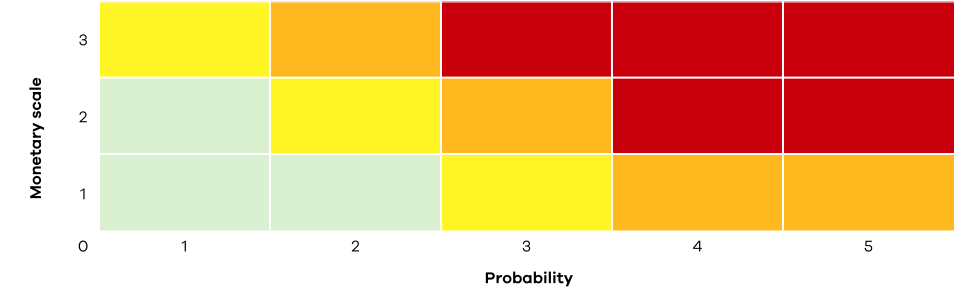
Risks and opportunities are currently not prioritised on the basis of their source. Risks and opportunities arising from sustainability topics are therefore not prioritised over others but are integrated into the general risk management process. In the future, opportunities management will be part of a collaborative strategic process between the respective specialist departments and the Group ESG Office.
UNIQA analyses physical and transition climate risks for both the investment portfolio and the corporate underwriting portfolio on the basis of several scenarios (see “Resilience analysis”).
The qualitative aspects of climate-related opportunities were reviewed as part of the materiality assessment.
1.10.2 Material impacts, risks and opportunities and their interaction with strategy and business model (ESRS 2 SBM-3) and description of the processes to identify and assess climate-related material impacts, risks and opportunities (IRO-1)
UNIQA has systematically integrated sustainability risks into its business strategy and risk management processes in order to identify, assess and effectively manage potential environmental, social and governance-related impacts at an early stage.
The ongoing development of long-term climate scenarios is a key issue for UNIQA. A quantitative Group-wide approach is being developed that is methodologically consistent with climate-related assumptions in other reports. Both physical risks (risk of natural disaster, physical risk exposure of the companies in which UNIQA invests) and transition risks (climate-related assets) to which the portfolio is exposed are analysed.
In addition, sustainability risks and their potential causes in the operational risk cycle are identified early on (internal control system and risk identification) through critical analyses of various departments (quality assurance process).
In relation to Solvency II reporting templates, quantitative data on physical risks and transition risks is reported directly to the Austrian Financial Market Authority (FMA) and the European Insurance and Occupational Pensions Authority (EIOPA).
The process for evaluating outsourcing risks at external business partners is also being refined throughout the Group and now explicitly takes the sustainability of our outsourcing partners into account.
All relevant ESG data is incorporated into the IT risk analysis software. It is therefore possible to monitor the ESG limit utilisation rates on a daily basis.
Several of the emerging risks relevant to UNIQA, such as natural disasters, climate change and the deterioration of public health systems, are closely linked to sustainability topics. These risks underscore the need for proactive climate change adaptation action, resilient infrastructure and sustainable investment strategies to mitigate long-term impacts.
Resilience analysis – results
Climate change scenarios are included in risk management in order to assess and strengthen resilience to climate-related risks. This comprehensive analysis forms part of the Own Risk and Solvency Assessment (ORSA), which is conducted on an annual basis and involves the assessment of both investments and losses due to natural disasters from insurance contracts under various climate scenarios. UNIQA employs two scenarios to measure climate-related risks: the early action scenario (NGFS scenario: Net Zero 2050) and the no further action scenario (NGFS scenario: Current Policies). These two scenarios were selected because they represent the two most plausible and relevant extremes (high transition risks & low physical risks; low transition risks & high physical risks). The climate change resilience analysis covers UNIQA’s largest insurance companies with a primary focus on the most important business segments and geographical regions. The analysis of flood and storm risks was prioritised in the climate scenarios. These hazards are geographically extensive, can last for several days and have high potential to cause significant human and economic losses. Hail risks were also analysed due to recent severe hailstorms, especially in Austria. No material physical or transition risks were excluded from the analysis.
Climate X Spectra conducted the analysis of physical risks for investment properties at the location level. Each physical risk analysed was assigned a probability of occurrence and degree of severity to represent potential physical and financial impacts. Owner-occupied properties owned by UNIQA were not included in this analysis.
Transition risks were analysed for corporate bonds, stocks and real estate. Each position in each asset class was assigned credit risk on the basis of the economic sector and its transition risk.
Early action is based on ambitious climate policies being adopted from the outset, with the aim of limiting global warming to 1.7°C by 2050 and reducing it to 1.5°C by the end of the century. The latest Network for Greening the Financial System (NGFS) “Net Zero 2050” scenario is applied. The macroeconomic assumptions entail an immediate increase in interest rates driven by inflation related to CO2 prices. This will lead to initial impairment losses, but to a substantial rebound due to the market adjustment prior to 2050. By contrast, the no further action scenario assumes that current policies will continue without additional measures, leading to warming of 2.4°C by 2050 and a temperature rise of 3°C by the end of the century. This scenario is based on the NGFS “Current Policy” scenarios and shows a delayed impact on the financial markets compared to the early action scenario with lower short-term losses but higher long-term physical risks due to the increased occurrence of natural disasters. The resilience analysis for the real estate portfolio was conducted on the basis of climate scenario RCP8.5 (Representative Concentration Pathway 8.5). The worst-case scenario assumes a 3 to 5°C rise in global temperatures. The real estate analysis examines the impact of physical risks between 2020 and 2100. The analysis of transition risks examines the individual positions of the asset classes covered by reference to their term, which differs from the time horizons defined in ESRS 2. The analysis defines a short term as being to the end of 2025, a medium term to 2027, and a long term from 2028 onwards.
The resilience analysis reveals that the early action scenario, characterised by ambitious climate policies, initially leads to impairment due to higher interest rates and impairment of properties, followed by a substantial rebound by 2050. By contrast, the no further action scenario results in lower direct losses with increasing investments by 2050 but poses higher long-term physical risks due to the sharp increase in average annual losses from natural disasters by 2050 compared to the early action scenario. These findings underscore the need for proactive climate policies and increased flood control measures to mitigate future risks. In response, UNIQA plans to focus its strategy on diversifying investments, implementing effective risk mitigation measures and continuously monitoring climate-related risks to ensure long-term sustainability and resilience.
A climate risk analysis was carried out in the financial year to assess the risks to investment properties from environmental events. For the Taxonomy-eligible investment properties examined, this analysis showed a financial risk of €7.7 million (2024: €7.6 million). The increase resulted from a higher proportion of Taxonomy-eligible investment properties and the related expansion of the climate risk analysis.
The resilience analysis of transition risks revealed the following anticipated financial impacts for each asset class:
Corporate bonds: €27.3 million (8.0 per cent of relevant exposure) (2024: €40.6 million and 9.1 per cent of relevant exposure)
Stocks: €0.3 million (8.1 per cent of relevant exposure) (2024: €0.1 million and 9.1 per cent of relevant exposure)
Properties: €37.7 million (2.0 per cent of relevant exposure) (2024: €39.4 million and 2.0 per cent of relevant exposure)
Resilience analysis – impact on strategy
The resilience analysis is used to inform the Management Board by highlighting the need for proactive and flexible measures to mitigate climate-related risks. The early action scenario emphasises the importance of immediate and ambitious climate policies to limit long-term impacts. By contrast, the no further action scenario underscores the severe consequences of inaction, especially in terms of losses from natural disasters.
With the help of the sustainability strategy and the targets and actions it sets forth, UNIQA is able to adapt investments to climate change in the short, medium and long term. In the short and medium term, there is the risk that opportunity costs may arise as a result of limitations on fossil fuels and nuclear energy.
However, the incremental phase-out of fossil fuels permits a managed transition in order to adapt the portfolio to climate change. For example, the phase-out of crude oil by 2030 and natural gas by 2035 is pursued for direct investments in companies that generate more than 5 per cent of their revenue from the respective fossil fuels. Since 2025, no direct investments have been held in companies that generate more than 5 per cent of their revenue from the coal business.
With the validation of these science-based targets, UNIQA is committed to decarbonising the covered asset classes by 2027 or 2030. In line with the SBTi framework, the targets will also be renewed at five-year intervals.
Sustainable investments contribute to the adaptation of investments to climate change with investments in projects such as green bonds and infrastructure projects focused on renewable energy. The current target entails achieving €2 billion in sustainable investments by 2025. This was already achieved in 2023.
1.10.3 Disclosure requirements in ESRS covered by the undertaking’s sustainability statement (IRO-2)
As part of the materiality assessment process, the Group ESG Office examines the requirements of each disclosure requirement in detail and, together with the experts from the specialist departments, assesses in qualitative terms whether publishing individual disclosures substantially contributes to clarifying how UNIQA manages material impacts, risks and opportunities in connection with sustainability topics (impact, risk and opportunity management). By adopting this approach, UNIQA ensures that only stakeholder-relevant information is published, while at the same time providing a clear picture of the effectiveness of internal management and risk management systems in the field of sustainability.
Based on the double materiality assessment carried out, the following disclosure requirements have been identified as material:
|
Description of the disclosure requirement |
Chapter |
|---|---|---|
E1 |
Climate change |
|
ESRS 2 GOV-3 |
Integration of sustainability-related performance in incentive schemes |
1.4 |
1 |
Transition plan for climate change mitigation |
2.2.1 |
ESRS 2 SBM-3 |
Material impacts, risks and opportunities and their interaction with strategy and business model |
1.9, 2.3.1, 2.4.1, 2.5.1, 2.6.1 |
ESRS 2 IRO-1 |
Description of the processes to identify and assess material climate-related impacts, risks and opportunities |
1.10.2 |
2 |
Policies related to climate change mitigation and adaptation |
2.3.2, 2.4.2, 2.5.2, 2.6.2 |
3 |
Actions and resources in relation to climate change policies |
2.3.3, 2.4.3, 2.5.3, 2.6.3 |
4 |
Targets related to climate change mitigation and adaptation |
2.3.4, 2.4.4, 2.5.4, 2.6.4 |
5 |
Energy consumption and mix |
2.6.5 |
6 |
Gross Scopes 1, 2, 3 and Total GHG emissions |
2.2.2, 2.3.5, 2.4.5, 2.5.5, 2.6.6 |
7 |
GHG removals and GHG mitigation projects financed through carbon credits |
Not reported |
8 |
Internal carbon pricing |
Not reported |
9 |
Anticipated financial effects from material physical and transition risks and potential climate-related opportunities |
Not reported |
E2 |
Pollution |
Not material |
E3 |
Water and marine resources |
Not material |
E4 |
Biodiversity and ecosystems |
|
1 |
Transition plan and consideration of biodiversity and ecosystems in strategy and business model |
3.1.2 |
ESRS 2 SBM-3 |
Material impacts, risks and opportunities and their interaction with strategy and business model |
3.1.1 |
ESRS 2 IRO-1 |
Description of processes to identify and assess material biodiversity and ecosystem-related impacts, risks and opportunities |
3.1.1 |
2 |
Policies related to biodiversity and ecosystems |
3.1.3 |
3 |
Actions and resources in relation to biodiversity and ecosystems |
3.1.4 |
4 |
Targets related to biodiversity and ecosystems |
3.1.5 |
5 |
Impact metrics related to biodiversity and ecosystems change |
3.1.6 |
E5 |
Resource use and circular economy |
Not material |
S1 |
Own workforce |
|
ESRS 2 SBM-2 |
Interests and views of stakeholders |
1.8 |
ESRS 2 SBM-3 |
Material impacts, risks and opportunities and their interaction with strategy and business model |
1.9, 4.1 |
1 |
Policies related to own workforce |
4.2 |
2 |
Processes for engaging with own workers and workers’ representatives about impacts |
4.3 |
3 |
Processes to remediate negative impacts and channels for own workers to raise concerns |
4.4 |
4 |
Taking action on material impacts on own workforce, and approaches to mitigating material risks and pursuing material opportunities related to own workforce, and effectiveness of those actions |
4.5 |
5 |
Targets related to managing material negative impacts, advancing positive impacts, and managing material risks and opportunities |
4.6 |
6 |
Characteristics of the undertaking’s employees |
4.7 |
7 |
Characteristics of non-employee workers in the undertaking’s own workforce |
Not reported |
8 |
Collective bargaining coverage and social dialogue |
4.8 |
9 |
Diversity metrics |
4.9 |
10 |
Adequate wages |
Not material |
11 |
Social protection |
Not reported |
12 |
Persons with disabilities |
Not reported |
13 |
Training and skills development metrics |
4.10 |
14 |
Health and safety metrics |
Not material |
15 |
Work-life balance metrics |
Not reported |
16 |
Remuneration metrics (pay gap and total remuneration) |
4.11 |
17 |
Incidents, complaints and severe human rights impacts |
4.12 |
S2 |
Workers in the value chain |
|
ESRS 2 SBM-2 |
Interests and views of stakeholders |
1.8 |
ESRS 2 SBM-3 |
Material impacts, risks and opportunities and their interaction with strategy and business model |
1.9, 5.1 |
1 |
Policies related to value chain workers |
5.2 |
2 |
Processes for engaging with value chain workers about impacts |
5.3 |
3 |
Processes to remediate negative impacts and channels for value chain workers to raise concerns |
5.4 |
4 |
Taking action on material impacts on value chain workers, and approaches to managing material risks and pursuing material opportunities related to value chain workers, and effectiveness of those actions |
5.5 |
5 |
Targets related to managing material negative impacts, advancing positive impacts, and managing material risks and opportunities |
5.6 |
S3 |
Affected communities |
Not material |
S4 |
Consumers and end-users |
|
ESRS 2 SBM-2 |
Interests and views of stakeholders |
1.8 |
ESRS 2 SBM-3 |
Material impacts, risks and opportunities and their interaction with strategy and business model |
1.9, 6.1 |
1 |
Policies related to consumers and end-users |
6.2 |
2 |
Processes for engaging with consumers and end-users about impacts |
6.3 |
3 |
Processes to remediate negative impacts and channels for consumers and end-users to raise concerns |
6.3 |
4 |
Taking action on material impacts on consumers and end-users, and approaches to managing material risks and pursuing material opportunities related to consumers and end-users, and effectiveness of those actions |
6.4 |
5 |
Targets related to managing material negative impacts, advancing positive impacts, and managing material risks and opportunities |
6.5 |
G1 |
Business conduct |
|
ESRS 2 GOV-1 |
The role of the administrative, supervisory and management bodies |
1.3 |
ESRS 2 IRO-1 |
Description of the processes to identify and assess material impacts, risks and opportunities |
1.10.1 |
1 |
Corporate culture and business conduct policies |
7.1 |
2 |
Management of relationships with suppliers |
7.2 |
3 |
Prevention and detection of corruption and bribery |
7.1 |
4 |
Confirmed incidents of corruption or bribery |
7.3 |
5 |
Political influence and lobbying activities |
7.4 |
6 |
Payment practices |
Not material |
|
Reference to other EU legislation |
Chapter |
ESRS 2 GOV-1 paragraph 21 (d) |
|
|
|---|---|---|
Board’s gender diversity |
SFDR: Indicator number 13 of Table #1 of Annex 1 |
1.3 |
ESRS 2 GOV-1 paragraph 21 (e) |
|
|
Percentage of board members who are independent |
Benchmark Regulation: Commission Delegated Regulation (EU) 2020/1816, Annex II |
1.3 |
ESRS 2 GOV-4 paragraph 30 |
||
Statement on due diligence |
SFDR: Indicator number 10 Table #3 of Annex 1 |
1.5 |
ESRS 2 SBM-1 paragraph 40 (d) i |
|
|
Involvement in activities related to fossil fuel activities |
SFDR: Indicator number 4 Table #1 of Annex 1 |
Not relevant |
ESRS 2 SBM-1 paragraph 40 (d) ii |
|
|
Involvement in activities related to chemical production |
SFDR: Indicator number 9 Table #2 of Annex 1 |
Not relevant |
ESRS 2 SBM-1 paragraph 40 (d) iii |
|
|
Involvement in activities related to controversial weapons |
SFDR: Indicator number 14 Table #1 of Annex 1 |
Not relevant |
ESRS 2 SBM-1 paragraph 40 (d) iv |
|
|
Involvement in activities related to cultivation and production of tobacco |
Benchmark Regulation: Commission Delegated Regulation (EU) 2020/1818, Article 12(1) Commission Delegated Regulation (EU) 2020/1816, Annex II |
Not relevant |
ESRS E1-1 paragraph 14 |
|
|
Transition plan to reach climate neutrality by 2050 |
EU Climate Law: Regulation (EU) 2021/1119, Art. 2 (1) |
2.2.1 |
ESRS E1-1 paragraph 16 (g) |
|
|
Undertakings excluded from Paris-aligned benchmarks |
Pillar 3: Article 449a Regulation (EU) No 575/2013; Commission Implementing Regulation (EU) 2022/2453 Template 1: Banking book – Climate change transition risk: Credit quality of exposures by sector, emissions and residual maturity |
2.2.1 |
ESRS E1-4 paragraph 34 |
|
|
GHG emission reduction targets |
SFDR: Indicator number 4 Table #2 of Annex 1 |
2.3.4, 2.4.4, 2.5.4, 2.6.4 |
ESRS E1-5 paragraph 38 |
|
|
Energy consumption from fossil sources disaggregated by sources (only high climate impact sectors) |
SFDR: Indicator number 5 Table #1 and Indicator number 5 Table #2 of Annex 1 |
2.6.5 |
ESRS E1-5 paragraph 37 |
|
|
Energy consumption and mix |
SFDR: Indicator number 5 Table #1 of Annex 1 |
2.6.5 |
ESRS E1-5 paragraphs 40-43 |
|
|
Energy intensity associated with activities in high climate impact sectors |
SFDR: Indicator number 6 Table #1 of Annex 1 |
2.6.5 |
ESRS E1-6 paragraph 44 |
|
|
Gross Scope 1, 2, 3 and Total GHG emissions |
SFDR: Indicators number 1 and 2 Table #1 of Annex 1 |
2.2.2, 2.3.5, 2.4.5, 2.5.5, 2.6.6 |
ESRS E1-6 paragraphs 53-55 |
|
|
Gross GHG emissions intensity |
SFDR: Indicators number 3 Table #1 of Annex 1 |
2.2.2 |
ESRS E1-7 paragraph 56 |
|
Not relevant |
GHG removals and carbon credits |
EU Climate Law: Regulation (EU) 2021/1119, Article 2(1) |
|
ESRS E1-9 paragraph 66 |
|
Not reported (phase-in) |
Exposure of the benchmark portfolio to climate-related physical risks |
Benchmark Regulation: Delegated Regulation (EU) 2020/1818, Annex II Delegated Regulation (EU) 2020/1816, Annex II |
|
ESRS E1-9 paragraph 66 (a) |
|
Not reported (phase-in) |
Disaggregation of monetary amounts by acute and chronic physical risk |
Pillar 3: Article 449a Regulation (EU) No 575/2013; Commission Implementing Regulation (EU) 2022/2453 paragraphs 46 and 47; Template 5: Banking book – Climate change physical risk: Exposures subject to physical risk. |
|
ESRS E1-9 paragraph 66 (c) |
|
Not reported (phase-in) |
Location of significant assets at material physical risk |
Pillar 3: Article 449a Regulation (EU) No 575/2013; Commission Implementing Regulation (EU) 2022/2453 paragraphs 46 and 47; Template 5: Banking book – Climate change physical risk: Exposures subject to physical risk. |
|
ESRS E1-9 paragraph 67 (c) |
|
Not reported (phase-in) |
Breakdown of the carrying value of its real estate assets by energy-efficiency classes |
Pillar 3: Article 449a Regulation (EU) No 575/2013; Commission Implementing Regulation (EU) 2022/2453 paragraph 34; Template 2: Banking book – Climate change transition risk: Loans collateralised by immovable property – Energy efficiency of the collateral |
|
ESRS E1-9 paragraph 69 |
|
Not reported (phase-in) |
Degree of exposure of the portfolio to climate-related opportunities |
Benchmark Regulation: Commission Delegated Regulation (EU) 2020/1818, Annex II |
|
ESRS E2-4 paragraph 28 |
|
Not material |
Amount of each pollutant listed in Annex II of the E-PRTR Regulation (European Pollutant Release and Transfer Register) emitted to air, water and soil |
SFDR: Indicator number 8 Table #1 of Annex 1 Indicator number 2 Table #2 of Annex 1 Indicator number 1 Table #2 of Annex 1 Indicator number 3 Table #2 of Annex 1 |
|
ESRS E3-1 paragraph 9 |
|
Not material |
Water and marine resources |
SFDR: Indicator number 7 Table #2 of Annex 1 |
|
ESRS E3-1 paragraph 13 |
|
Not material |
Dedicated policy |
SFDR: Indicator number 8 Table 2 of Annex 1 |
|
ESRS E3-1 paragraph 14 |
|
Not material |
Sustainable oceans and seas |
SFDR: Indicator number 12 Table #2 of Annex 1 |
|
ESRS E3-4 paragraph 28 (c) |
|
Not material |
Total water recycled and reused |
SFDR: Indicator number 6.2 Table #2 of Annex 1 |
|
ESRS E3-4 paragraph 29 |
|
Not material |
Total water consumption in m3 per net revenue on own operations |
SFDR: Indicator number 6.1 Table #2 of Annex 1 |
|
|
Not material |
|
|
SFDR: Indicator number 7 Table #1 of Annex 1 |
|
ESRS 2- IRO 1 – E4 |
|
1.10.1.1 |
|
SFDR: Indicator number 10 Table #2 of Annex 1 |
|
ESRS 2- IRO 1 – E4 |
|
Not material |
|
SFDR: Indicator number 14 Table #2 of Annex 1 |
|
ESRS E4-2 paragraph 24 (b) |
|
Not relevant |
Sustainable land/agriculture practices or policies |
SFDR: Indicator number 11 Table #2 of Annex 1 |
|
ESRS E4-2 paragraph 24 (c) |
|
Not relevant |
Sustainable oceans/seas practices or policies |
SFDR: Indicator number 12 Table #2 of Annex 1 |
|
ESRS E4-2 paragraph 24 (d) |
|
Not relevant |
Policies to address deforestation |
SFDR: Indicator number 15 Table #2 of Annex 1 |
|
ESRS E5-5 paragraph 37 (d) |
|
Not material |
Non-recycled waste |
SFDR: Indicator number 13 Table #2 of Annex 1 |
|
ESRS E5-5 paragraph 39 |
|
Not material |
Hazardous waste and radioactive waste |
SFDR: Indicator number 9 Table #1 of Annex 1 |
|
ESRS 2 SBM-3 – ESRS S1 paragraph 14 (f) |
|
|
Risk of incidents of forced labour |
SFDR: Indicator number 13 Table #3 of Annex 1 |
Not material |
ESRS 2 SBM-3 – ESRS S1 paragraph 14 (g) |
|
|
Risk of incidents of child labour |
SFDR: Indicator number 12 Table #3 of Annex 1 |
Not material |
ESRS S1-1 paragraph 20 |
|
|
Human rights policy commitments |
SFDR: Indicator number 9 Table #3 and Indicator n. 11 Table #1 of Annex 1 |
4.2 |
ESRS S1-1 paragraph 21 |
|
|
Due diligence policies on issues addressed by the fundamental International Labor Organisation Conventions 1 to 8 |
Benchmark Regulation: Commission Delegated Regulation (EU) 2020/1816, Annex II |
4.2 |
ESRS S1-1 paragraph 22 |
|
|
Processes and measures for preventing trafficking in human beings |
SFDR: Indicator number 11 Table #3 of Annex I |
4.2 |
ESRS S1-1 paragraph 23 |
|
Not material |
Workplace accident prevention policy or management system |
SFDR: Indicator number 1 Table #3 of Annex I |
|
ESRS S1-3 paragraph 32 (c) |
|
|
Grievance/complaints handling mechanisms |
SFDR: Indicator number 5 Table #3 of Annex I |
4.4 |
ESRS S1-14 paragraph 88 (b) and (c) |
|
Not material |
Number of fatalities and number and rate of work-related accidents |
SFDR: Indicator number 2 Table #3 of Annex I |
|
ESRS S1-14 paragraph 88 (e) |
|
Not material |
Number of days lost to injuries, accidents, fatalities or illness |
SFDR: Indicator number 3 Table #3 of Annex I |
|
ESRS S1-16 paragraph 97 (a) |
|
|
Unadjusted gender pay gap |
SFDR: Indicator number 12 Table #1 of Annex I Benchmark Regulation: Commission Delegated Regulation (EU) 2020/1816, Annex II |
4.11 |
ESRS S1-16 paragraph 97 (b) |
|
|
Excessive CEO pay ratio |
SFDR: Indicator number 8 Table #3 of Annex I |
4.11 |
ESRS S1-17 paragraph 103 (a) |
|
|
Incidents of discrimination |
SFDR: Indicator number 7 Table #3 of Annex I |
4.12 |
ESRS S1-17 paragraph 104 (a) |
|
|
Non-respect of UNGPs on Business and Human Rights and OECD Guidelines |
SFDR: Indicator number 10 Table #1 and Indicator n. 14 Table #3 of Annex I |
4.12 |
ESRS 2 SBM-3 – ESRS S2 paragraph 11 (b) |
|
|
Significant risk of child labour or forced labour in the value chain |
SFDR: Indicators number 12 and n. 13 Table #3 of Annex I |
Not material |
ESRS S2-1 paragraph 17 |
|
|
Human rights policy commitments |
SFDR: Indicator number 9 Table #3 and Indicator n. 11 Table #1 of Annex 1 |
5.2 |
ESRS S2-1 paragraph 18 |
|
|
Policies related to value chain workers |
SFDR: Indicator number 11 and n. 4 Table #3 of Annex 1 |
5.2 |
ESRS S2-1 paragraph 19 |
|
|
Non-respect of UNGPs on Business and Human Rights and OECD Guidelines |
SFDR: Indicator number 10 Table #1 of Annex 1 |
5.2 |
ESRS S2-1 paragraph 19 |
|
|
Due diligence policies on issues addressed by the fundamental International Labor Organisation Conventions 1 to 8 |
Benchmark Regulation: Commission Delegated Regulation (EU) 2020/1816, Annex II |
5.2 |
ESRS S2-4 paragraph 36 |
|
|
Human rights issues and incidents connected to its upstream and downstream value chain |
SFDR: Indicator number 14 Table #3 of Annex 1 |
5.5 |
ESRS S3-1 paragraph 16 |
|
Not material |
Human rights policy commitments |
SFDR: Indicator number 9 Table #3 and Indicator n. 11 Table #1 of Annex 1 |
|
ESRS S3-1 paragraph 17 |
|
Not material |
Non-respect of UNGPs on Business and Human Rights and OECD Guidelines |
SFDR: Indicator number 10 Table #1 of Annex 1 |
|
ESRS S3-4 paragraph 36 |
|
Not material |
Human rights issues and incidents |
SFDR: Indicator number 14 Table #3 of Annex 1 |
|
ESRS S4-1 paragraph 16 |
|
|
Human rights issues and incidents |
SFDR: Indicator number 9 Table #3 and Indicator n. 11 Table #1 of Annex 1 |
6.2 |
ESRS S4-1 paragraph 17 |
|
|
Non-respect of UNGPs on Business and Human Rights and OECD Guidelines |
SFDR: Indicator number 10 Table #1 of Annex 1 |
6.2 |
ESRS S4-4 paragraph 35 |
|
|
Human rights issues and incidents |
SFDR: Indicator number 14 Table #3 of Annex 1 |
6.4 |
ESRS G1-1 paragraph 10 (b) |
|
|
United Nations Convention against Corruption |
SFDR: Indicator number 15 Table #3 of Annex 1 |
7.1 |
ESRS G1-1 paragraph 10 (d) |
|
|
Protection of whistleblowers |
SFDR: Indicator number 6 Table #3 of Annex 1 |
7.1 |
ESRS G1-4 paragraph 24 (a) |
|
|
Fines for violation of anti-corruption and anti-bribery laws |
SFDR: Indicator number 17 Table #3 of Annex 1 |
7.3 |
ESRS G1-4 paragraph 24 (b) |
|
|
Standards of anti-corruption and anti-bribery |
SFDR: Indicator number 16 Table #3 of Annex 1 |
7.3 |
UNIQA has not made use of the options provided for in Delegated Act (EU) 2025/4812 (Quick fix), which provide for further transitional relief in sustainability reporting for the financial year.
Entities for which a separate sustainability report is not required
The following entities are covered by the consolidated sustainability report and therefore make use of the exemption pursuant to Art. 19(a)(9) or Art. 29(a)(8) of Directive 2013/34/EU to forgo the preparation of a separate sustainability report:
UNIQA Asigurari S.A. (Romania, Bucharest)
UNIQA osiguranje d.d. (Croatia, Zagreb)
UNIQA Towarzystwo Ubezpieczeń S.A. (Poland, Warsaw)